On making incense

Beyond luxuriating in pleasant fragrances, certain aromatic resins, herbs, oils, and other ingredients are traditionally associated with aspects of the Divine. Incense burned on charcoal can purify space, evoke particular energies, and improve focus during ritual. Our sense of smell evokes deep memories and can more readily bring us back to a previous state of consciousness, especially when the same scents are used repeatedly in a particular context.
Good Sephirotic incense blends are hard to find. Trevor Jones made excellent incense, sold in Glastonbury, and Sorcerer's Apprentice in Leeds also produced interesting Sephirotic blends – perhaps they still do. Towards the end of the twentieth century, I was advised to write to the reclusive Margaret Bruce, who had largely retired but was still supplying her remarkable incense by post to existing customers. I bought several of her ‘Qabalah’ blends, which I used for many years in personal practice and group work. (See The Magick and Mystery of Maurice/Margaret Bruce by Melissa Seims for a fantastic account of her life and work.)
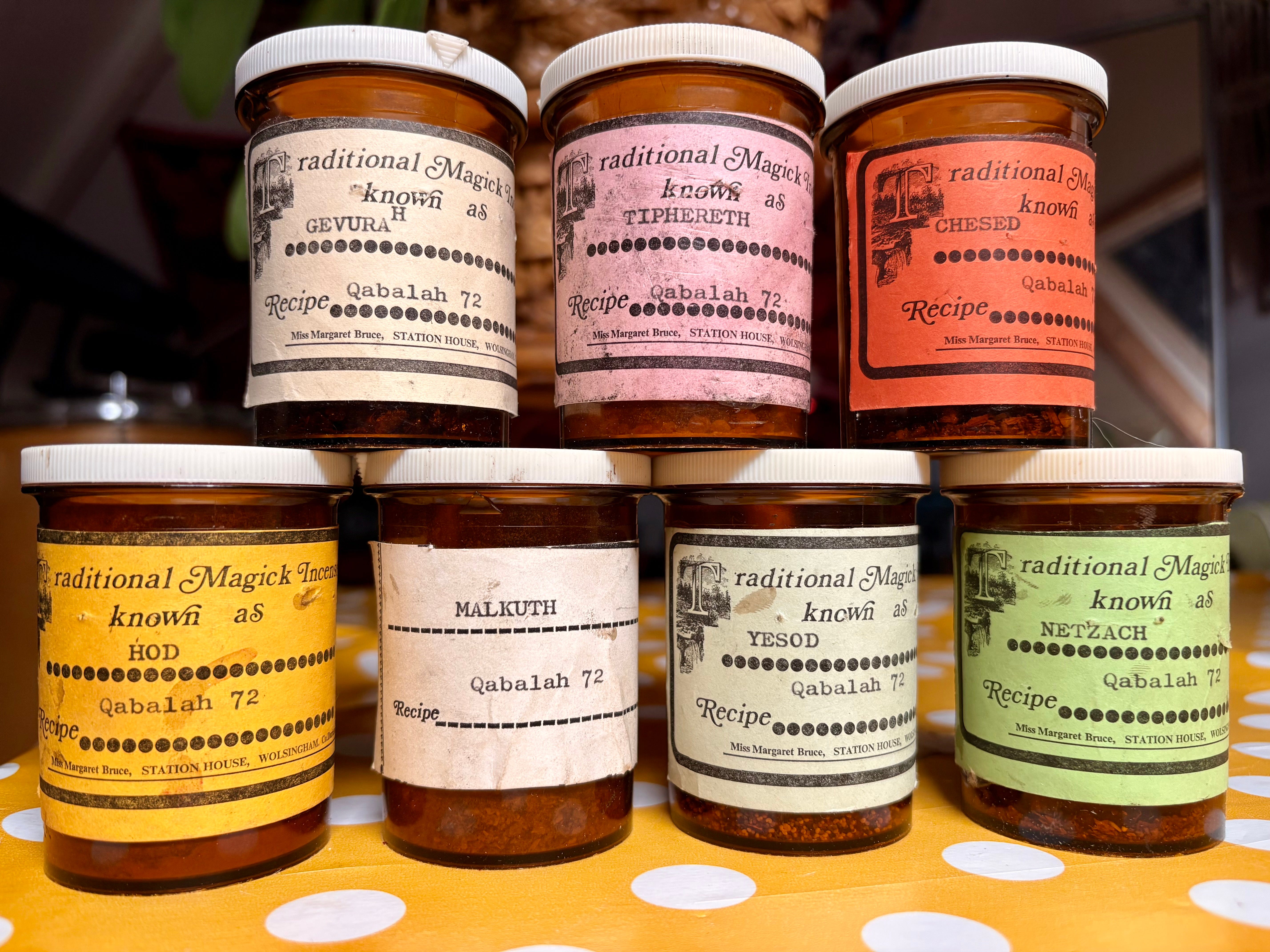
What is remarkable is that these incense blends retained both their fragrance and their potency for decades. Margaret Bruce extolled the virtue of leaving her incense to steep for several years, on the basis that incense blends, like whisky or wine, improved with age. Sadly, when she died, her recipes appear to have been lost to the mists of time. I have concluded, with independent advice, that her blends were exceptionally complex and could not be reproduced in practice.
Like the ashes of the Red Heifer, once they are gone, they are gone forever. So the only thing to do was start again from first principles. In much the same way that it is usually better to make your own magical tools, even if they are not as slick or professionally finished as something bought off the shelf, they benefit from having been crafted by you. The process of making them is a magical act of will in itself, and I think the same is true of incense.
Crafting your own incense for ritual use does require careful observation, patience, and plenty of trial and error. It is as much a practical craft as a symbolic one, and understanding how aromatic materials behave in real-world conditions is essential to using them effectively.
A word of warning about traditional correspondences. Biblical, Agrippa, and Crowley's 777, etc., all provide useful hints, but they shouldn’t always be taken as definitive recipes. Sometimes the exact botanical or animal product referred to is uncertain. Sometimes it may no longer exist, or only a particular plant strain produces the aromatic extract originally intended.
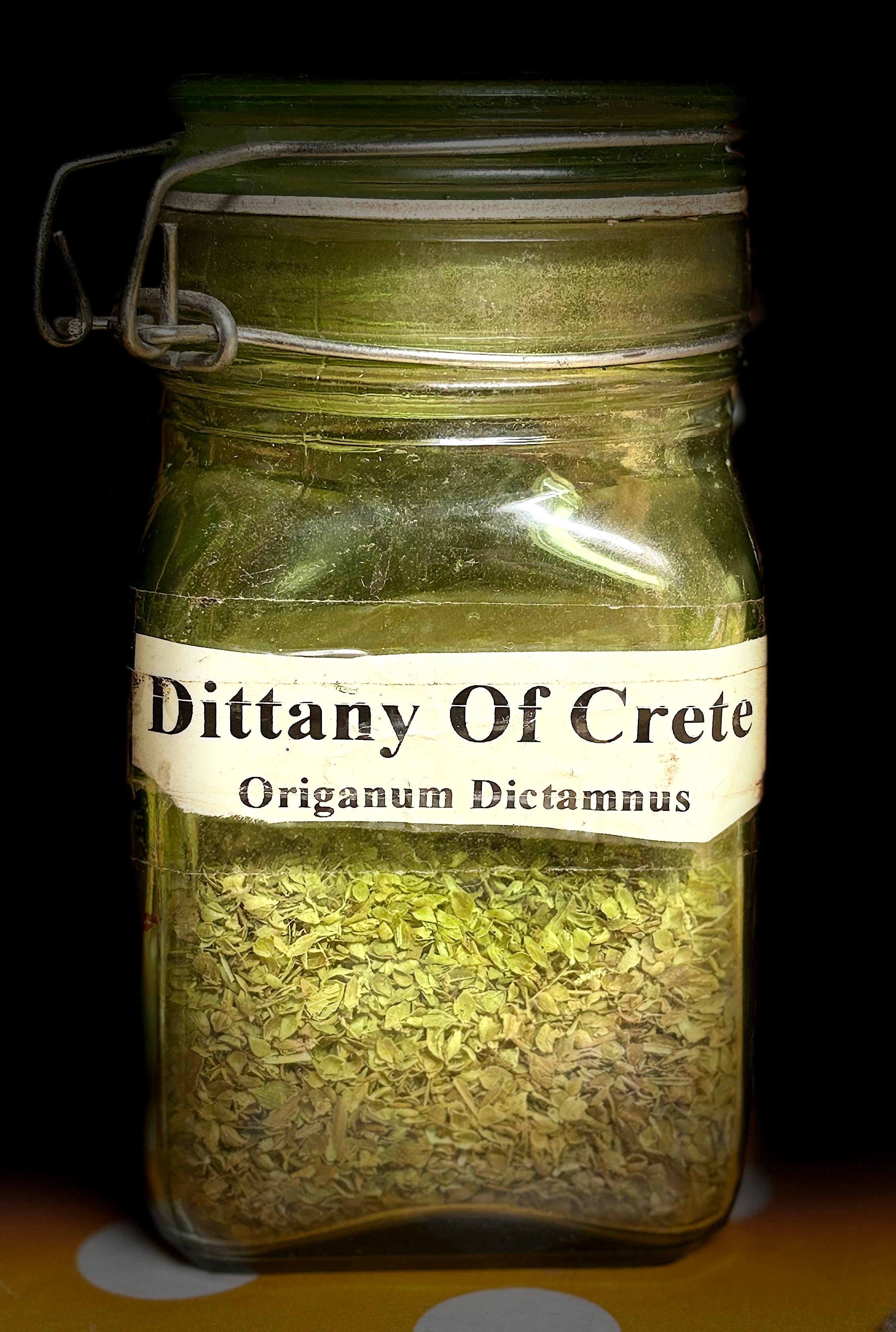
Take Dittany of Crete, for example, traditionally associated with the Sephirah Malkuth. It is an aromatic herb, but when burned it just smells like a bonfire. It’s pretty much unusable in incense, except in the tiniest pinch, simply out of respect for the correspondence. It does, though, produce a great deal of thick smoke, and there may be some association with making spirits visible in the rising plumes. Personally, I think that connection is tenuous, as there are other, much better-smelling substances that produce just as much smoke.
When I first started making incense, I accumulated quite a collection of books. They were a useful starting point, but I would take many of the published recipes for Sephirotic incense with a huge pinch of salt. Some books contain hundreds of formulas, and one has to wonder whether the author has really spent time testing each one. It is all too easy to throw together an incense by following correspondences that make sense on paper, but does it actually smell good? I have tried some that were theoretically right but, in practice, were really horrible.
There’s also a temptation to think that the rarer and more exotic the ingredients, the more profound the result will be, which I don’t think is true. Every ingredient has a cost, not just financial. Frankincense, myrrh, and other resins are the dried tears of wounded trees, sometimes sourced from war-torn regions. The quality of ingredients varies enormously, though there can be a certain amount of snobbery, as though only one impossibly rare variety will do. It is also worth remembering that some aromatic substances simply do not agree with everyone. Not necessarily because of full allergies, but because of unusual physical reactions. They might make some people sneeze or make their eyes sore. That is not what we want during group work.
Some traditional incenses also use animal products such as ambergris, produced by sperm whales, and musk. I once accidentally bought a small amount of castoreum for a recipe before discovering it comes from beavers' scent glands. It is certainly very pungent and adds a persistent animal note to a blend, but I won’t be buying it again.
Asafoetida is another interesting ingredient. On its own, it smells repugnant, but in tiny quantities it seems to work like MSG in cooking, adding a punch that brings out the other ingredients. Traditionally, it is associated with dispelling unwanted or unredeemed spirits, and you can tell why when you use too much.
Finding ingredients is so much easier now than when I first began, thanks to internet shopping, although there is still no substitute for buying them in person if you can. Being able to see and smell the raw materials before buying them tells you a great deal. My favourite place remains Star Child in Glastonbury, which consistently stocks good-quality raw ingredients. I have used their individual ingredients for years, although I have much less experience with their pre-mixed incense blends.
I’m particularly interested in Sephirotic incense, since Kabbalah is central to my working tradition. They are not exactly the same as the planetary correspondences associated with the Sephiroth, although there is some overlap. I have been working towards creating a set of Sephirotic incense recipes, and this is what I have learned.
The aromatic gum forms the foundation. Essential oils, herbs, spices, or seeds may be included, but the main body of the incense will usually consist of one of the principal resins: frankincense, myrrh, opoponax, and so on. In practice, there is often surprisingly little essential oil or herb in the finished blend.
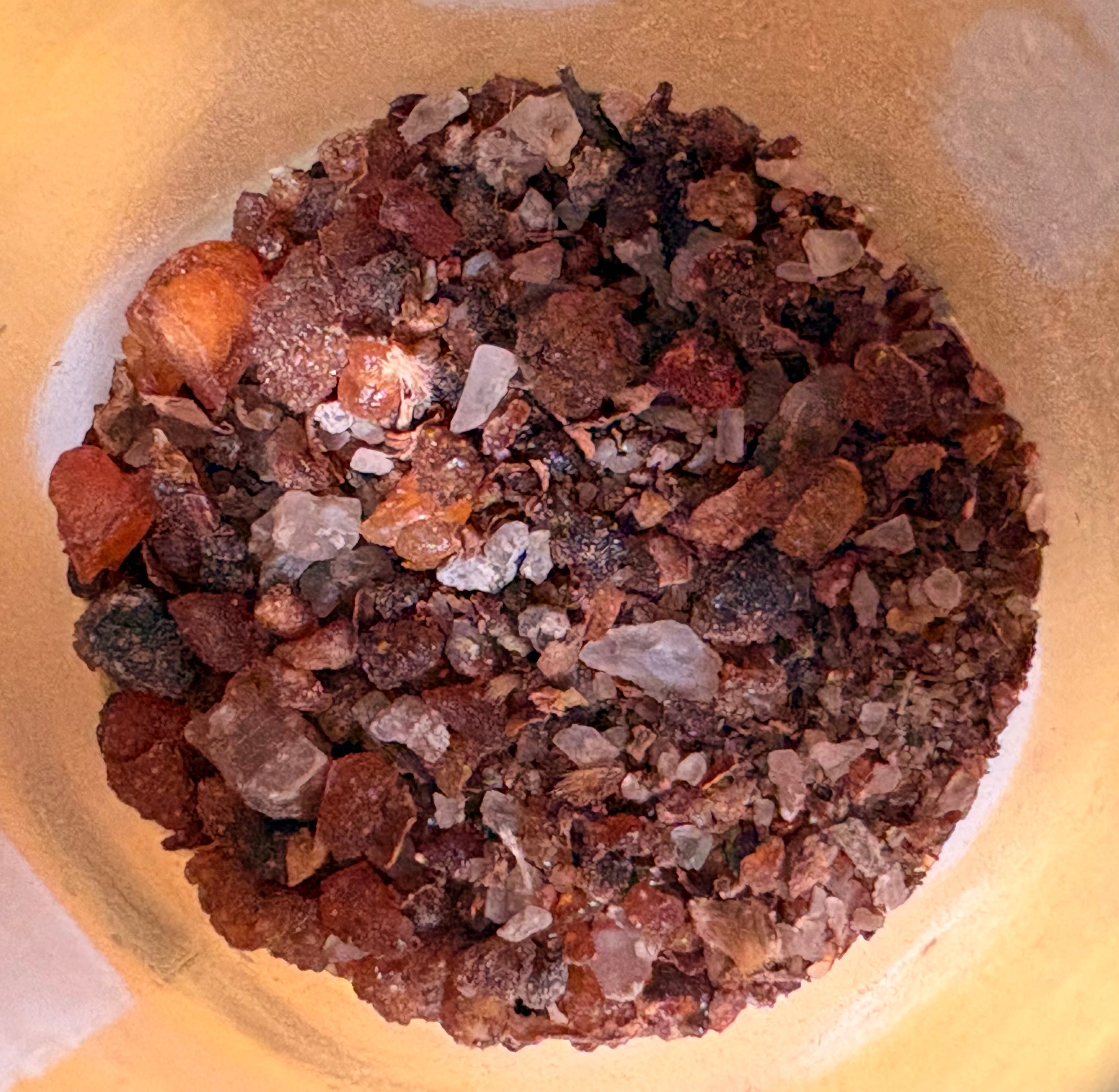
Like a liquid perfume, blended incense benefits from having top, middle, and base notes. The brighter top notes usually come from essential oils, but they also disappear first when heated. As a general rule, the longer a blend is left to mature, the more thoroughly the oils combine with the other ingredients and the more gradually they are released, rather than simply burning off in the first few seconds. You can also, to some extent, control how quickly the incense burns by adjusting the size of the resin pieces and degree of grinding for other ingredients. Crushing them more finely with a pestle and mortar increases the combustible surface area and alters both how the fragrance develops and how quickly it burns.
Whenever I make a new blend, I prepare very small test batches, no more than a teaspoon in total, and burn them on a single charcoal disc. I take notes, adjust the proportions, and try again. It sometimes takes half a dozen attempts, or more, before I arrive at something practical, pleasing, and genuinely evocative of the Sphere it is intended to represent.
There is also the more complex question of how the individual Sephirotic incenses work when combined together. Ideally, they should harmonise when used in pairs or triads. I want them to chime together like different instruments in a piece of music, complementing rather than competing with one another. No single fragrance should dominate the others.
I am by no means an expert. I can only share what basic practical experience has taught me. Use your hands and your nose, and experiment – a lot. Trust your senses and your intuition. Keep a notebook and fill it with observations, however strange they may seem. Record what ingredients smell like when they burn, because this is often very different from how they smell at room temperature. Sometimes the most wonderfully fragrant materials become acrid on charcoal, while ingredients that hardly smell at all before burning become quite extraordinary. Adapt and keep refining. Incense making is much more an art than a science. Use your incense as often as you can in ritual. It will gradually become associated with particular states of consciousness, and years later a familiar fragrance can transport you straight back to where you were before.